
About
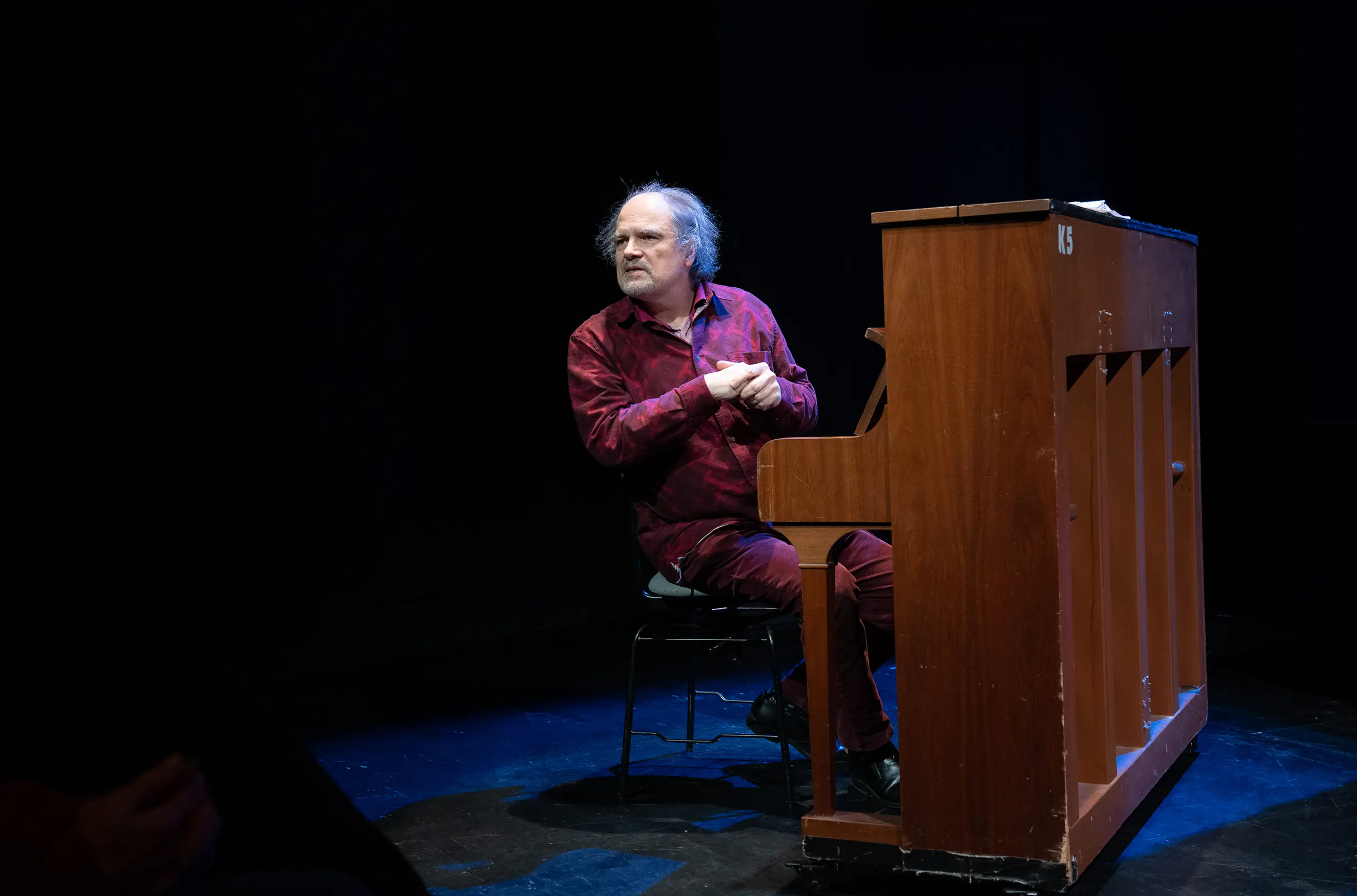
His directing work now comprises 180 productions and has taken him, among others, to Den Jyske Opera Aarhus, the Gran Teatro Córdoba, the Vienna Volksoper, Berlin’s Gorki Theatre, Munich’s Gärtnerplatztheater, as well as repeatedly to Leipzig, Dortmund, Chemnitz, Meiningen, and Klagenfurt.
His own works include Heidi – das Heimatmusical, the music-theatre play The Three Musketeers, the opera pasticcios The Servant of Two Masters (Mozart), Kaspar Hauser – A Dream Play (Schubert), The Canterville Ghost (Gershwin/Purcell), Munich Life (Offenbach), the musical comedy Charley’s Aunt (Ernst Fischer), as well as the children’s pieces The Cow Carmen – a “Moo-sical” and The Imaginary Kraken – a Sea-tale with Lots of Music for the Hofspielhaus Munich.
From 2005 to 2008 he was a lecturer at the Nuremberg–Augsburg University of Music. As a guest, he has worked repeatedly at the Conservatory of Maastricht and at the Nuremberg University of Music. Since 2019 he has held a teaching position at the Lübeck University of Music.
As part of the International Opera Course of Jeunesses Musicales Germany, he staged La Cenerentola (2007), Don Giovanni (2013), Le nozze di Figaro (2015), and Die Fledermaus (2025), and will direct Der Freischütz there in the summer of 2027.
As a reciter, he collaborates with pianist Aris A. Blettenberg (Winged Words: Melodramas by Schumann, Liszt, Debussy & Poulenc; George Frideric Handel’s Resurrection: a musical reading of texts by Stefan Zweig with music by Handel) and with guitarist Takeo Sato (Castelnuovo-Tedesco: Platero and I).
With his cabaret-style popular song program How Did the Lipstick Get into Lehmann’s Under-bed? and the literary-musical solo My Wagner, he regularly appears as a solo performer.
Seine heute 180 Inszenierungen umfassende Regietätigkeit führte ihn u.a. an die Den Jyske Opera Aarhus, das Gran Teatro Cordoba, die Wiener Volksoper, das Berliner Gorki–Theater, das Gärtnerplatztheater München, sowie bereits mehrfach nach Leipzig, Dortmund, Chemnitz, Meiningen und Klagenfurt.
Zu seinen eigenen Werken zählen u.a. Heidi – das Heimatmusical, das Schauspiel mit Musik Die 3 Musketiere, die Opern–Pasticcios Der Diener zweier Herren (Mozart), Kaspar Hauser – ein Traumspiel (Schubert), Das Gespenst von Canterville (Gershwin/Purcell), Münchner Leben (Offenbach), die Musikalische Komödie Charleys Tante (Ernst Fischer) sowie die Kinderstücke Die Kuh Carmen – ein Muhsical und Der eingebildete Krake – Meerchen mit viel Musik für das Hofspielhaus München.
Von 2005 bis 2008 war er Dozent an der Musikhochschule Nürnberg–Augsburg.
Als Gast arbeitete er wiederholt am Konservatorium von Maastricht und an der Musikhochschule Nürnberg.
Seit 2019 hat er einen Lehrauftrag an der Musikhochschule Lübeck.
Im Rahmen des Internationalen Opernkurses der Jeunesses Musicales Deutschland brachte er 2007 La Cenerentola, 2013 Don Giovanni, 2015 Le nozze di Figaro, 2025 Die Fledermaus heraus und wird 2027 dort Der Freischütz inszenieren.
Als Rezitator ist er Partner des Pianisten Aris A. Blettenberg (Geflügelte Worte: Melodramen von Schumann, Liszt, Debussy & Poulenc; Georg Friedrich Händels Auferstehung: musikalische Lesung von Stefan Zweig mit Händel) und des Gitarristen Takeo Sato (Castelnuovo–Tedesco: Platero und ich).
Mit seinem Schlagerprogramm Wie kommt der Lippenstift in Lehmanns Unterbett? und dem literarisch–musikalischen Solo Mein Wagner tritt er regelmäßig solistisch auf.

TEACHING
No one goes to the zoo to look at a framework. We want to see the monkeys fascinating climbing and swinging on it. If the framework is stable and at the same time enticing, the monkey will gladly accept the invitation every day and perform with infectious enthusiasm. Then I can watch the same monkeys in the same framework every time, and yet the fascination will still feel new every time.
My framework is staging. I can also teach grips and swings, the craft, and how not to "fall off the bar" — but I cannot do the acrobatics for them.
From this follows the great personal responsibility of everyone involved. Performers need to realize that their task is to perform with both head and heart—and to understand what can be learned to achieve that. I am here to help them with this.
Kein Mensch geht in den Zoo, um sich ein Gerüst anzuschauen. Wir wollen die Affen sehen, die in dem Gerüst turnen und uns faszinieren. Wenn das Gerüst stabil und zugleich reizvoll ist, wird der Affe das Angebot jeden Tag gerne annehmen und mit ansteckender Lust turnen. Dann kann ich mir jedesmal dieselben Affen im selben Gerüst anschauen, und die Faszination wird doch immer neu sein.
Mein Gerüst ist die Inszenierung, ich kann den Spielenden Griffe und Schwünge, ihr Handwerk, beibringen und, wie man nicht "von der Stange fällt". Ihnen das "Turnen" abnehmen kann ich nicht.
Darus erklärt sich die hohe Eigenverantwortlichkeit aller Beteiligten. Die Darstellenden müssen erkennen, daß ihre Aufgabe das Spielen mit Kopf & Herz ist und was man dafür lernen kann. Ihnen dabei zu helfen, bin ich da.